In manufacturing, product consistency begins long before the final product reaches the market. Whether producing pharmaceutical powders, food ingredients, products or chemical formulations, the quality of the end product is heavily influenced by what happens during the mixing stage.
One of the most common causes of production inconsistencies is poor or uncontrolled mixing.
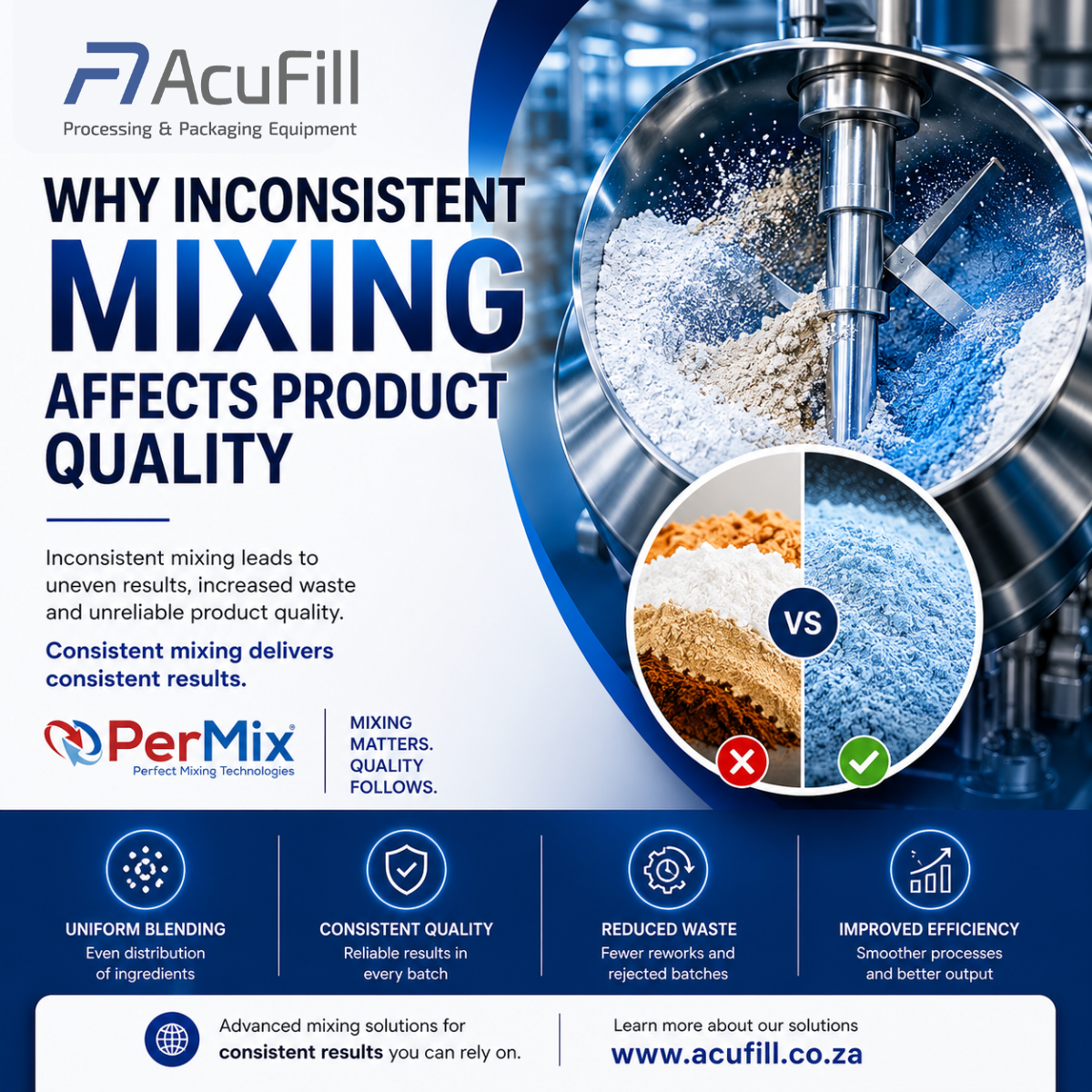
When powders and ingredients are not blended uniformly, manufacturers can experience a range of operational and product quality challenges. Ingredient segregation, uneven texture, inconsistent formulations and unstable batch quality can all originate from ineffective mixing processes. In industries such as pharmaceuticals and food production, even small variations in ingredient distribution can affect product reliability, consistency and overall manufacturing performance.
As production demands continue to increase, manufacturers are placing greater focus on creating more controlled and repeatable processing environments. Consistency is no longer viewed simply as a quality objective — it has become an essential part of improving efficiency, reducing waste and maintaining reliable production outcomes across every batch.
The Hidden Impact of Inconsistent Mixing
Mixing is one of the most important stages within many manufacturing processes, yet it is often underestimated when evaluating production performance.
Inconsistent mixing can create challenges that extend far beyond the blending stage itself. Poor ingredient distribution may lead to variations in product composition, affecting everything from texture and appearance to dosage accuracy and product functionality.
In pharmaceutical manufacturing, uneven powder blending can affect formulation consistency and dosage reliability. In food production, poor mixing may lead to uneven flavour distribution, texture inconsistencies or unstable product quality. Across chemical and industrial applications, inconsistent blending can affect material behaviour, processing performance and final product stability.
These issues often create additional operational pressures throughout the production cycle. Rejected batches, increased material waste, production delays and additional quality control requirements can all result from inconsistent mixing processes.
As production volumes increase, maintaining repeatable and controlled blending conditions becomes increasingly important. Manufacturers require processing systems capable of producing reliable results while supporting efficient and scalable operations.
The Relationship Between Mixing & Product Quality
In many manufacturing environments, product quality is directly linked to process consistency.
When mixing processes are not properly controlled, manufacturers often experience fluctuations in product performance that become increasingly difficult to manage as production scales.
Uneven mixing can affect:
- ingredient distribution
- product texture
- density consistency
- powder flow behaviour
- formulation accuracy
- product appearance
- overall batch repeatability
Over time, these inconsistencies can affect operational efficiency, increase waste and create additional pressure on quality control teams.
Manufacturing operations require processing systems that support greater control and repeatability throughout production. By improving blending consistency, manufacturers are able to create more predictable processing conditions and more reliable final products.
Why Different Materials Require Different Mixing Approaches
Not all materials behave the same way during processing.
Manufacturing environments regularly process a wide range of powders, granules, pastes and high-viscosity materials, each with different flow characteristics, densities and blending requirements. Using the wrong mixing technology for a specific application can result in poor ingredient distribution, material segregation or inconsistent processing performance.
Some products require gentle and uniform blending to protect sensitive ingredients and maintain product integrity. Other applications require more intensive mixing capabilities to process dense, cohesive or high-viscosity materials effectively.
This is why selecting the correct mixing technology plays such an important role in achieving product consistency and reliable batch quality.
The right mixing solution helps manufacturers create more stable processing environments by improving ingredient distribution, reducing variability and supporting repeatable production outcomes across every batch.
The Importance of Selecting the Right Mixing Technology
Different mixing technologies are designed to support different material behaviours and production requirements.
Selecting the appropriate mixing system is not simply about capacity or speed — it is about understanding how materials behave during processing and identifying the best solution to support product consistency and process reliability.
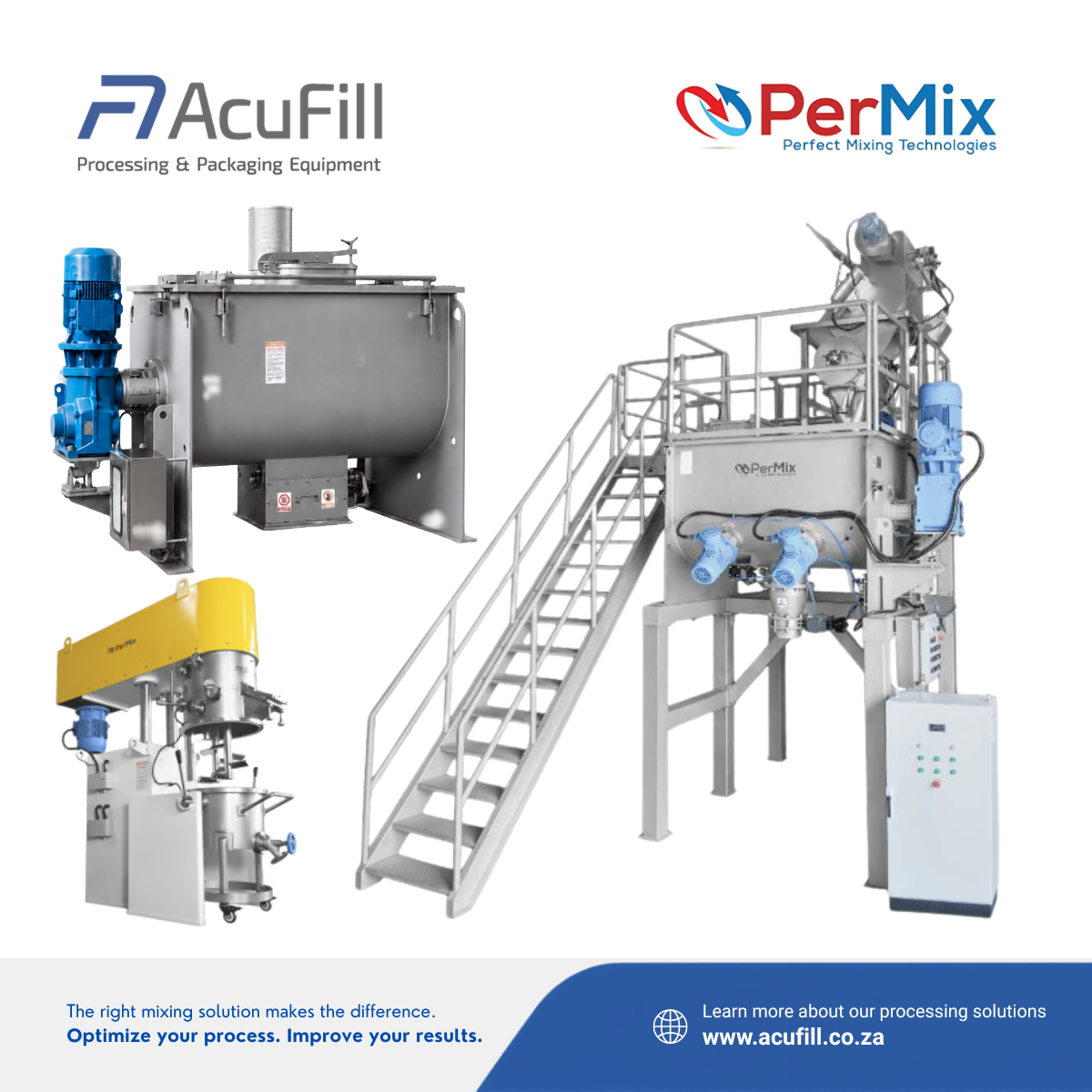
Conical and double cone mixers are often used for applications requiring gentle and homogeneous blending, particularly when handling sensitive powders or formulations that require minimal product degradation.
Planetary and Z-blade mixing systems are better suited for dense, viscous or paste-like materials that require more intensive mixing action and greater processing force.
Ribbon and paddle mixing systems may be used for high-volume powder blending applications where efficient ingredient distribution and repeatable mixing performance are essential.
Each mixing technology is designed to solve specific processing challenges while supporting more controlled and stable manufacturing environments.
Supporting More Efficient Manufacturing Operations
Consistent mixing does not only improve product quality — it also supports broader operational efficiency.
When manufacturers achieve more reliable and repeatable blending processes, they are often able to reduce production interruptions, minimise material waste and improve overall process control throughout manufacturing operations.
As manufacturers continue to focus on scaling production while maintaining product quality, the importance of stable and repeatable mixing processes continues to grow.
This is particularly important in industries where precision and consistency are critical to maintaining compliance, customer expectations and long-term operational performance.
Why PerMix Mixing Technologies Support Process Consistency
Modern manufacturing environments require mixing systems capable of handling a wide range of materials while supporting consistent and repeatable production outcomes.
PerMix mixing technologies are designed to improve ingredient distribution, support uniform blending and create more stable processing environments across a wide range of manufacturing applications.
Different mixing solutions are available to support specific processing requirements, material behaviours and production objectives. This flexibility allows manufacturers to identify processing systems best suited to their operational environment and product requirements.
Whether processing pharmaceutical powders, food ingredients, chemical formulations or high-viscosity materials, selecting the appropriate mixing technology helps manufacturers improve repeatability, maintain product integrity and support more controlled production environments.
By improving consistency during the mixing stage, manufacturers are able to create stronger foundations for overall product quality and operational reliability throughout the manufacturing process.
Building More Reliable Production Processes
As manufacturing environments continue to evolve, businesses are placing greater emphasis on consistency, efficiency and process control.
Production quality is no longer determined solely by the final stage of manufacturing. It is influenced by every part of the process — including how materials are blended and handled long before the product reaches the market.
Manufacturers that invest in more controlled and reliable mixing processes are better positioned to improve product consistency, reduce operational inefficiencies and support long-term production performance.
At Acufill, we work with advanced PerMix mixing technologies to help manufacturers identify the right processing solution for their specific application, material type and production requirements.
Contact Us to learn more