
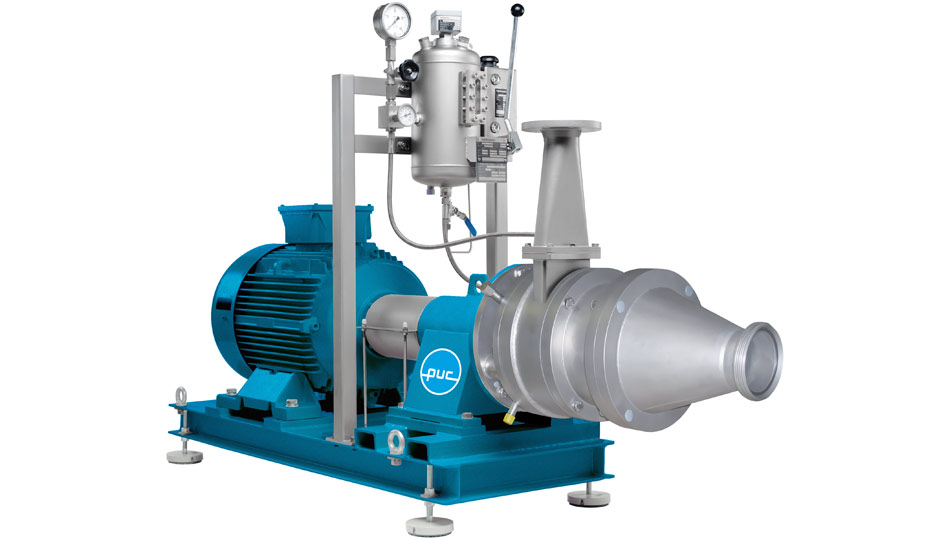
Among the myriad tools and technologies at the disposal of chemical engineers, one gem stands out for its versatility and efficiency – the colloid mill. This powerhouse of a machine has quietly become an indispensable asset in the manufacturing processes of various chemical compounds. In this blog, we’ll delve into the fascinating world of colloid mills, exploring their uses, benefits, and the transformative impact they have on the chemical landscape.
Understanding Colloid Mills:
Colloid mills are precision-engineered machines designed for the efficient reduction of particle size in colloidal suspensions. With a history dating back to the early 20th century, these mills have evolved into sophisticated equipment capable of producing stable and uniform emulsions and dispersions – a crucial requirement in many chemical manufacturing processes.
Key Components:
Colloid mills typically consist of a conical or toothed rotor that spins within a stator. The rotor-stator interaction generates intense shear forces, breaking down particles into smaller sizes. The gap between the rotor and stator can be adjusted to control the fineness of the resulting product.
Applications in the Chemical Industry:
1. Emulsification:
Colloid mills excel in emulsifying processes, creating stable emulsions of liquids that are typically immiscible. This capability is exploited in the production of various chemicals, such as specialty chemicals, surfactants, and additives.
2. Dispersion:
The uniform dispersion of solid particles in a liquid matrix is crucial for many chemical formulations. Colloid mills are adept at achieving this, ensuring homogeneity in products like paints, coatings, and pharmaceutical formulations.
3. Particle Size Reduction:
In chemical manufacturing, achieving the desired particle size is often paramount. Colloid mills can efficiently reduce particle size, enhancing the reactivity and performance of chemical compounds.
Advantages of Colloid Mills:
1. Efficiency:
Colloid mills operate at high speeds, delivering efficient and rapid particle size reduction. This efficiency translates to reduced processing times and increased overall production throughput.
2. Versatility:
The adaptability of colloid mills makes them suitable for a wide range of applications, from food and pharmaceuticals to petrochemicals and polymers. This versatility makes them a valuable asset for chemical engineers working across diverse sectors.
3. Precision:
The ability to control the gap between the rotor and stator allows for precise control over the final particle size, resulting in consistent product quality.
As we navigate the intricate landscape of the chemical industry, it’s evident that colloid mills have secured their place as indispensable tools for engineers and manufacturers. From emulsification to dispersion and particle size reduction, these machines contribute significantly to the efficiency, quality, and versatility of chemical processes. Embracing the capabilities of colloid mills is not just an option; it’s a strategic move toward staying at the forefront of innovation in the dynamic world of chemical manufacturing.
Probst and Class have been manufacturing colloid mill for over 90 years and have accumulated a wealth of knowledge that can be put to work to help you achieve your emulsion requirements. Contact Us via our Acufill website, alternatively send us an email on info@acufill.co.za.